GRIT

Not talent. Not luck. Grit. Have you ever thought about what brings out the best in your people?—not just at the beginning, but for the long run?

When I ask managers whether they’d rather hire a “natural talent” or someone who knows how to work hard, most say: “Give me the team player, no question.”
But when it comes down to it? They often go with the talent.
And that makes sense—talent is easy to spot and immediately impressive.
But here’s the truth: talent gives you a head start. What gets you to the finish line—is grit.

Grit is what keeps people focused.
It’s the fuel that drives perseverance through failure, through routine, through frustration.
But grit isn’t just about working hard. It’s about determination that’s powered by meaning—by passion, by purpose, by something bigger that keeps pulling you forward, even when you feel like giving up.

So how can you spot grit in a candidate?
Look for the two defining traits of gritty people: perseverance and hope.
You’ll see it in their life story—the urge to improve, to learn, to refine.
And that hope? It’s not naive optimism like “everything will work out.” It’s active hope—a deep belief:
“If I focus on what I can control, keep going, keep growing—the results will come.”

Now take that mindset—and imagine an entire team that lives and breathes it.
🧭 So how do you build a culture of grit?
Normalize trial and error—it’s not failure, it’s progress.
Give feedback on effort, not just outcomes.
Show practical optimism—“Here’s how we’ll get better.”
And most of all—be the example yourself.

Want to learn more about building grit in your team? Reach out here or privately: yael@blat-lapidot.co.il

So who needs luck? Start building grit 😉 Dr. Yael Lapidot

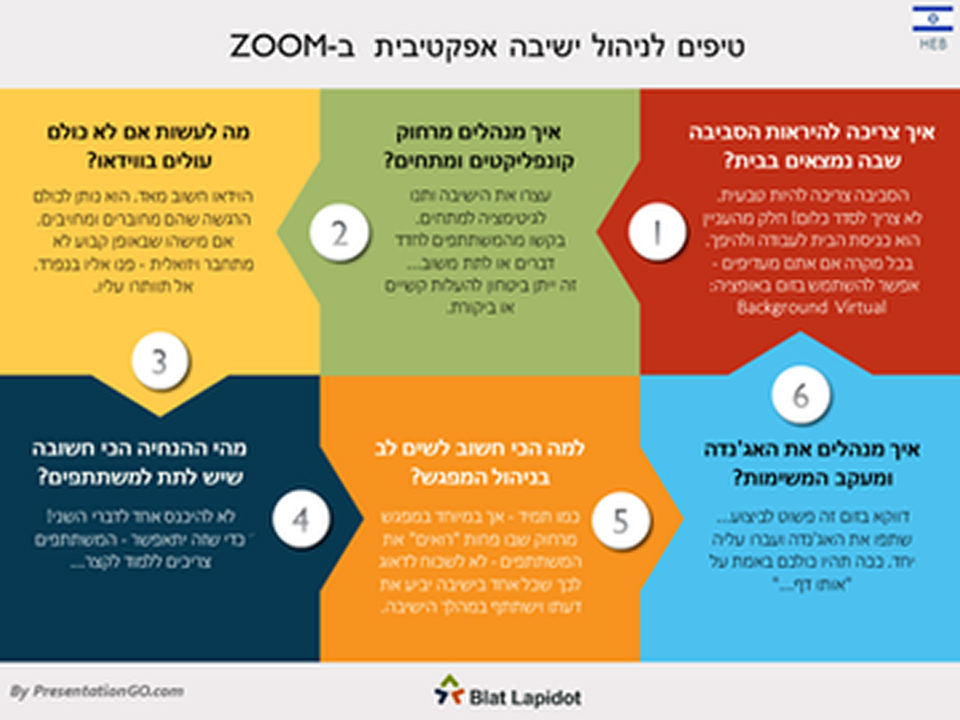
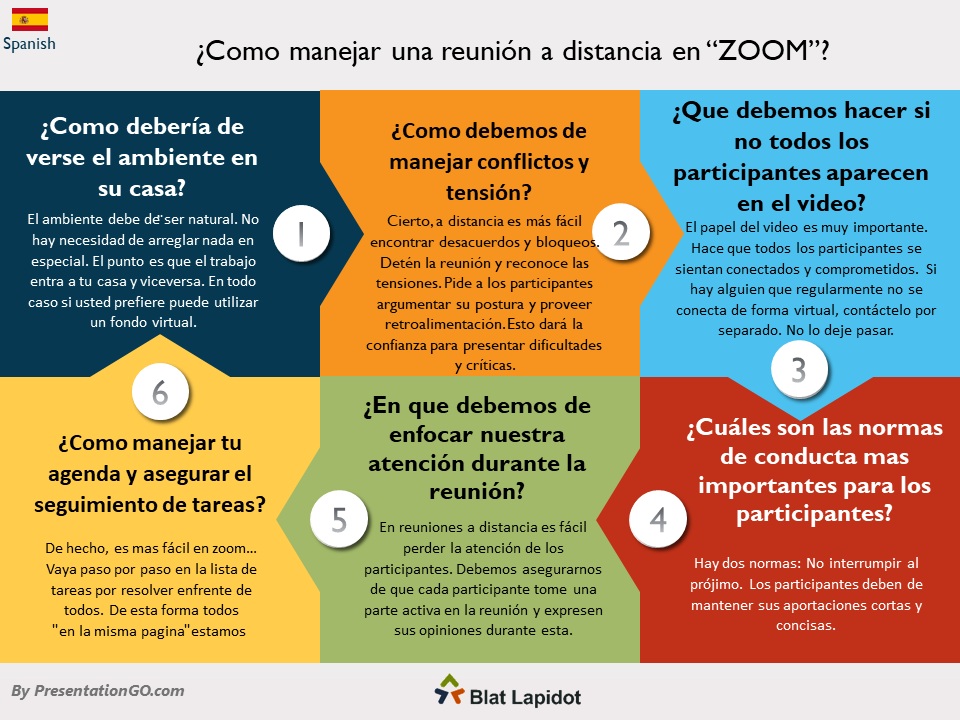
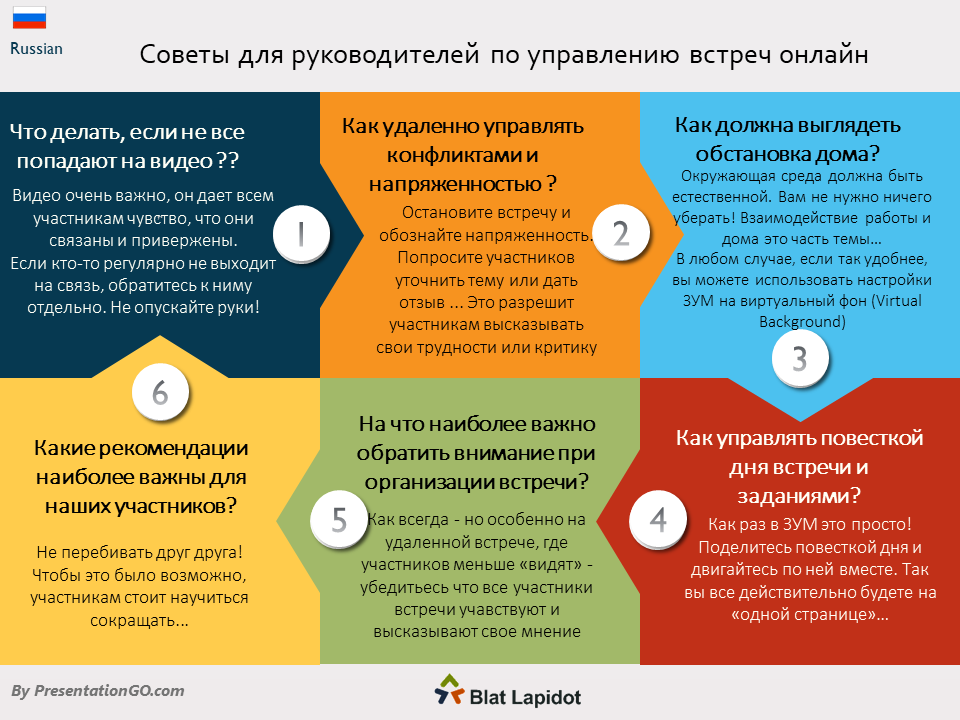
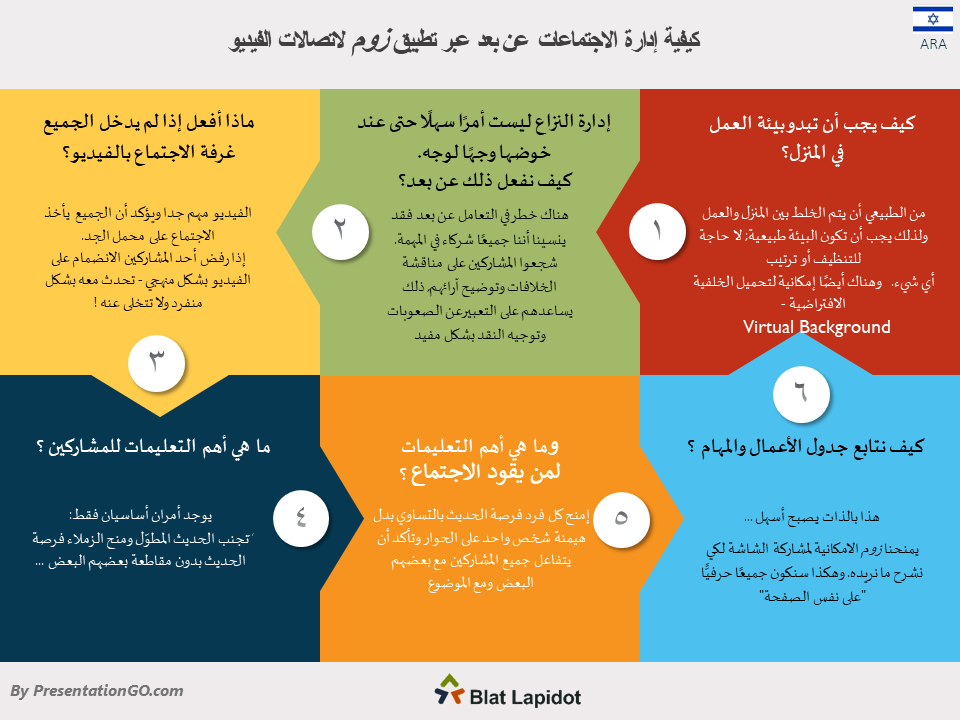
How to manage remote meeting

Weird days, Easter and Passover in the shade of the Corona. This year at “Blat Lapidot team”, we decided to share for free the answers to the most frequently asked questions – how to manage fluency a zoom meeting. The world is small and we have translated for you into Arabic, German, French, Italian, Hungarian, Russian, Spanish and more ..stay safe!!

Everyone is happy with the employee except…..

This time we will bring the story of Hadas -a talented manager who has been struggling with a problem that has been bothering her for a long time. Hadas is a relatively young manager and manages the leading core product of the organization. Hadas turned to us due to a dilemma about one of her employees who she says is “overshadows my management.” Hadas says that Naomi was hired two years ago after a very successful interview in which she impressed her very much. The customers really like her. In contrast, the team does not like her at all. Naomi “does not let anyone express themselves.” She keeps reminding them of her experience, even when it is irrelevant. It is a very complicated situation. The customers keep asking for her. She receives only positive feedback from internal interfaces in the company. The team doesn’t satisfy Hadas says that she has spoken with her countless times, set boundaries and explained herself softly, assertively, kindly, but there has been almost no change. What would you suggest? For those who have come across a similar case, we are available for personal consultation on Messenger

A new CEO asks

I was appointed as a manager in an experienced company. This is not my first job, but I was still surprised to find a large, tired and unambitious staff. One-on-one they often talk about successes and praise themselves. I do not want to destroy their confidence, but they need to be realistic. We raised the question in our senior executives’ course and received practical answers: – Awareness – The way to achieve it is balanced feedback. Give real feedback which should always be composed of “improve and preserve”. – Data – Sometimes the answer is simple. Prepare a control report to analyze the existing situation. Each manager will analyze his responsibilities according to the report and write what he intends to change – Definitions – Sometimes out of a desire to say things directly, we forget to plan our message so that it gets said in a way that can be heard. Design your feedback so it can be accepted and adopted. The group’s summary was worn-out but true: It is not important to be right, it is important to be smart – do not just say everything you think, but find the right time, place and with the appropriate respect

Pool Tools – The Social Toolbox for Managers

Managerial development is moving beyond the classroom and one-on-one meetings toward the social channel. Our team frequently meets managers who consult with us and struggle with everyday dilemmas. We assumed you’ve probably encountered similar situations, and thought it would be worthwhile to turn our collective experience into a shared social toolbox for managers.

We will raise dilemmas, and you are invited to share, bring up similar situations, and suggest tools for “our manager.” On our end, we are available for personal consultation via video messenger or written messenger to continue discussing dilemmas on a personal and confidential basis.

This time, we’ll look at the case of “Keren Ltd.” (a fictional name, of course), a mid-sized company operating in a highly competitive market. The owner is also the CEO—very aggressive, works around the clock, and believes this is the only right way. He struggles to accept that senior managers have lives outside of work. His attitude toward people is strictly “black and white.”

He is surrounded by two “rings.”
The inner ring consists of a small clique: two out of five VPs and the company’s bookkeeper—his confidants, completely loyal to him.
The second ring includes five division managers who work day and night, receive generous bonuses, and are occasionally recognized. When he is dissatisfied, however, they are met with coldness and sometimes even open aggression. For the most part, they are extremely busy and barely have time to lift their heads.

The market is small and niche, and managers are afraid to leave because everyone knows everyone, and recommendations are critical. A young manager approached us with the following question:
“I really want to develop the team leader who reports to me and strengthen him, but I know that if I expose him to the CEO, he is likely to take harsh ricochets and lose his confidence. On the other hand, if I protect him behind closed doors, he will never be exposed to the real professional world, and I won’t be able to properly mentor him. What would you suggest she do? A dilemma…”

Honey, I forgot the kids!

How not to leave anyone behind in the organization’s internal marketing activities

A conference on beginning a company change management process in a medium-sized high-tech company. There was a familial atmosphere. The conference was a success and at the end, together with the higher management we sat down for a breather. Suddenly a senior manager approached and asked to speak to me privately. In the conversation he said he was hurt by the change management team. “why?” I asked. “You held such a big conference and did not think to invite me and the department.”

I realized there was a problem here. I would like to devote this post to analyzing populations with a stake in the company’s future so that similar situations do not recur.

Since then, for each activity, a table of interested parties is created, in the following order: Who should be informed, who needs to participate, who should receive a summary, who should lead the process and who should approve it. We suggest you adopt our table for any marketing activity!

As in every family, we also hurt others and are hurt by others, and as Yom Kippur approaches, we should ask forgiveness from anyone who was hurt.

How to change an organizational structure wisely and without a consultant

CEOs – this week I got a surprise. How to change an organizational structure wisely and without a consultant – I was asked to join a special meeting! The order came from an old client of ours. The CEO of a technology company that has developed unique technology in the financial field. After a second recruitment round, he decided to change the company’s organizational structure. He chose to invite about 15 outside people from various unrelated professions to brainstorm and find the correct organizational structure for him. We went in to the room without knowing each other or the purpose of the meeting. We came out after each of us spit-fired all kinds of different ideas, gave of himself and learned different ways of thinking from others. In the end, an efficient organizational structure was created which met the needs of the company, in all of half an hour!! I learned a something new and am happy to recommend it and pass it on.